Peter Riegel
"Running is a simple activity, but measuring it accurately requires science."
Related Tools & Articles
Biography
Peter Riegel (born 1935) is an American research engineer and recreational runner who made one of the most significant contributions to the sport's analytics: the Riegel prediction formula. While working at Battelle Memorial Institute in Columbus, Ohio, Riegel analyzed world record times across various distances and sports.
In 1977, he published his findings in Runner's World magazine in an article titled 'Time Predicting'. He proposed a simple power law equation: t2 = t1 * (d2 / d1)^1.06. This formula states that speed decays in a predictable way as distance increases. This formula remains the most widely used method for predicting race times, from 5Ks to marathons.
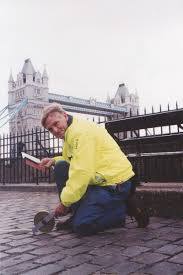
Riegel's contribution extends beyond just the formula. He served for many years as the Chairman of the Road Running Technical Council of USA Track & Field (USATF). In this role, he was instrumental in standardizing course measurement procedures, ensuring that a 'marathon' is truly the correct distance.
He is also known for his work in course measurement education, authoring the book 'Measurement of Road Race Courses'. Thanks to his rigorous scientific approach, runners today can trust that certified race courses are accurate.
Peter Riegel himself was an avid runner, completing numerous marathons and ultramarathons. His combination of engineering precision and passion for running has left a lasting legacy on how we measure performance and distance in the sport.
Key Achievements
Quotes
"Running is a simple activity, but measuring it accurately requires science."
"The formula is a tool, not a crystal ball. It predicts potential, not certainty."